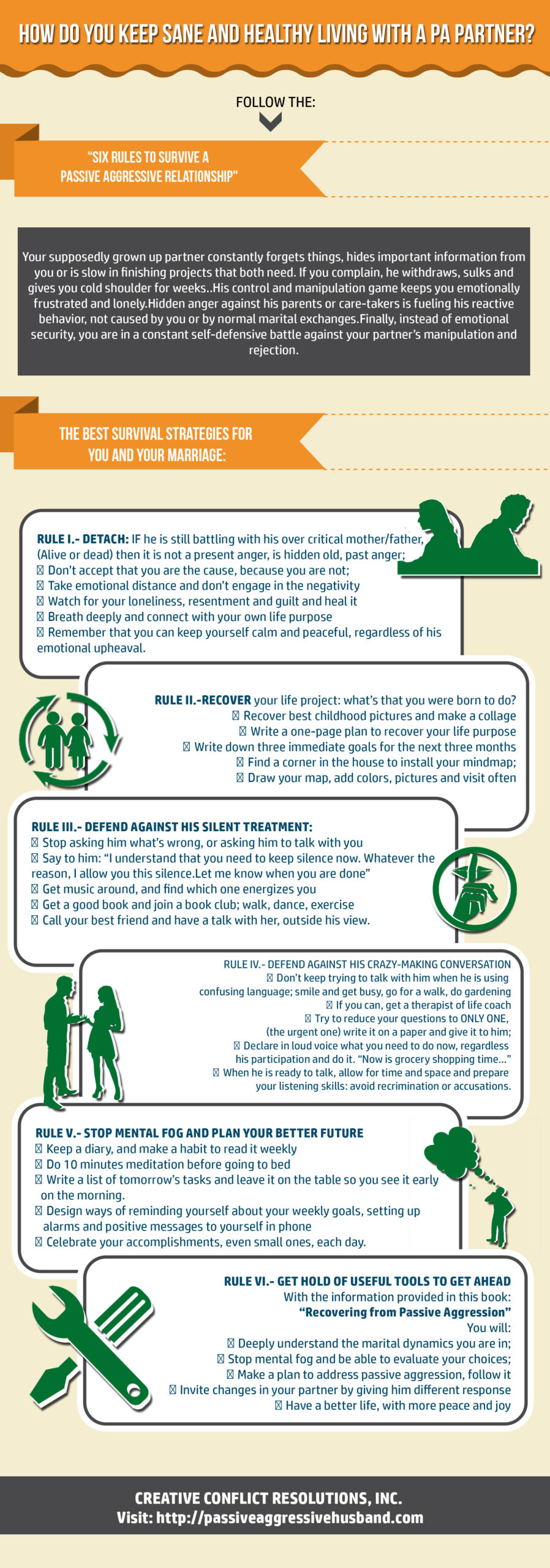
This post is written specifically for women who feel trapped, confused, and emotionally drained in their marriage to a passive aggressive husband. If you find yourself constantly questioning your own judgment, walking on eggshells, or feeling dismissed without understanding why, the guidance below offers concrete steps to regain your clarity and develop an action plan for healthier communication—even when your partner resists change.
 How to Stop Being Unhappy When Married to a Passive Aggressive Husband

I sometimes read lots of psychological advice about how to live better...I do it for my clients, and also for myself. Who doesn't want to learn how to be happier here and now? And there is a lot of good advice, like this one from Ali Davis:
- "Protect yourself from energy-draining and toxic people. They will suck the life out of you and have a negative impact on your motivation and effectiveness.
- Surround yourself with positive, constructive, solution-focused people who fuel your fire. It will give a tremendous boost to your energy levels which have a fairly hefty knock on your self-esteem.
- Have a strong self-care program that you work consistently. Include things like getting enough sleep, eating healthy foods, exercise, yoga, meditation. Self-care has a massive impact on how you feel and operate, mentally and physically. And how you feel and operate impacts how you live a happy life."
And at that moment, I do remember you....and is a big shock to try to match this cheery advice with the real circumstances I know you live in. Not a week, or a day, but the whole married experience of my reader is trapped in a dead-end marriage.
So, I turn the question upside down:
- How to stay motivated and improve personal effectiveness when you are in this constant depressive situation?
- Where do you go to clear your mind, and get some focus on things that really matter, (like your needs), while being "gaslighted"?
If you are dealing with a passive-aggressive partner without realizing what's going on, it can be crazy-making. You feel dismissed, shut down, ignored, and confused… but in a subtle enough way that you don't know how to process your feelings and react. Your judgment is being slowly impaired by this constant negative relationship, where there is little peace. Just when things seem to be going well, your partner picks a fight. You are baffled by the unexpected emotional distancing from your significant other. A nagging feeling emerges that prevents you from completely trusting your partner's connection with you. You begin to sense that his emotional distance inexorably will change to rejection and criticism without notice.
According to research published in the Journal of Family Psychology, couples experiencing persistent passive-aggressive dynamics report significantly higher levels of depression, anxiety, and relationship dissatisfaction, with partners of passive-aggressive individuals often experiencing symptoms similar to those seen in emotional abuse survivors.
However, having said that, who is the person that needs desperate clarity and focus on her own goals? Well, it's you!
And you can begin just where you are now, walking the first steps towards clarity...When you get my book "The Art of Living with a Passive Aggressive Husband" you have a plan to walk out of the confusion.
Here are two excerpts to show you how we provide steps to manage this induced confusion:
"Is very easy to discover the inherent pain that a relationship based on passive aggression brings. It is important that you identify exactly the behaviors that trigger your confusion, isolation, or anger, and ascribe them to his peculiar way of doing life in general. You are not responsible for his attitude, learned in his childhood. His constant sabotage shields him from experiencing any deep intimacy and trust.
First Steps to Manage the Confusion Caused by Passive Aggressive Behavior:
1.- Consider All Behavior as intentional:
Consider the annoying behavior (it can be sarcastic comments, public put-downs, and accusations) as "behavior that impacts me." Regard it as intentional behavior, regardless of his disclaimers….. Recognize your emotions concerning those behaviors: do you feel anger? or disappointment? or pain? Keep those emotions inside yourself, breathe deeply, and don't react.
This is the first step in the chain of power against PA manipulation: disconnect from the impact such behavior causes in you. This is not internal denial, because you know how much it hurts. Instead, it is the restraint of showing external signals of having been hurt, so you don't reward his aggression with your pain.
2.-Passive Aggressive Action Step:
Try to remain calm and poised. Control your breathing, and convince yourself that you aren't going to let this PA behavior get the best of you. PA people begin to win exactly when the shouting starts. They are successful when you become upset and angry at their inconsiderate behavior.
Instead, describe his behavior, and then talk about how it creates a problem. For instance, you might say:
"When we are discussing something and you make a sarcastic remark, it blocks the conversation and I'm not able to tell you what you're really asking. It would be helpful to me if you would tell me directly what you're thinking and feeling. That way, I can respond, and we can even make things better."
Chances are you will not get a direct response, but this step is basic for your own positioning. And it will get your mental clarity! You will stop feeling confused, blaming yourself, and lost.
Want to learn more so you have at last a plan for action?
Here is the link to the book: "The Art of Living with a Passive Aggressive Husband"
Frequently Asked Questions About Living with a Passive Aggressive Husband
What are the most common signs of a passive aggressive husband?
The most common signs include the silent treatment, sarcastic remarks disguised as jokes, procrastination on tasks he agreed to do, subtle sabotage of plans, and emotional withdrawal without explanation. You may also notice that he denies being angry while clearly demonstrating hostile behavior, leaving you feeling confused and questioning your own perception of reality.
Why does my passive aggressive husband deny his behavior when I confront him?
Denial is a core defense mechanism in passive aggressive behavior because it allows him to express hostility without taking responsibility for it. This behavior pattern often develops in childhood as a way to cope with environments where direct expression of anger was punished or unsafe. By denying his actions, he maintains control while making you doubt your own observations.
Can a passive aggressive husband change his behavior patterns?
Change is possible but requires the passive aggressive husband to first acknowledge his behavior and genuinely want to change. This typically requires professional therapy, as these patterns are deeply ingrained from childhood experiences. Without his commitment to change, your focus should shift to protecting your own emotional wellbeing and establishing firm boundaries.
How can I protect my mental health while married to a passive aggressive husband?
Protecting your mental health requires establishing clear boundaries, maintaining connections with supportive friends and family, and potentially working with a therapist who understands passive aggressive dynamics. It's essential to stop blaming yourself for his behavior and recognize that his communication patterns are not your fault or responsibility to fix.
Is passive aggressive behavior in marriage considered emotional abuse?
Many relationship experts, including Dr. Nora Femenia, recognize that persistent passive aggressive behavior can constitute a form of emotional abuse because it creates confusion, erodes self-esteem, and involves manipulation through gaslighting. The constant cycle of withdrawal, denial, and subtle hostility causes real psychological harm to the receiving partner over time.
What should I say when my husband uses the silent treatment against me?
When facing the silent treatment, calmly acknowledge what is happening without becoming emotional or reactive. You might say something like, "I notice you're not speaking to me, and I'm here to talk when you're ready." Then focus on your own activities and self-care rather than chasing his attention, which only rewards the manipulative behavior.
How do I know if I should stay or leave my passive aggressive husband?
This deeply personal decision depends on several factors including whether he acknowledges the problem, shows genuine willingness to change, and whether the relationship is causing you significant emotional or psychological harm. Working with a coach or therapist who specializes in passive aggressive relationships can help you gain clarity on your specific situation and make an informed decision based on your needs and circumstances.
📅 Last updated: