
Reclaim Your Voice Today
You deserve to be heard. Download your free guide to break free from silent treatment and reclaim your power in your relationship.
If you're a wife or partner struggling to cope with passive-aggressive behavior in your marriage, this practical survival guide is designed specifically for you. Created by Dr. Nora Femenia, Ph.D., a conflict coach and relationship advisor, this visual map provides step-by-step guidance on the choices and attitudes you can adopt during challenging interactions with a passive-aggressive spouse. Whether you're seeking to protect your emotional wellbeing or looking for clear strategies to respond more effectively, this tool offers a structured approach to maintaining your sanity while navigating this complex relationship dynamic.
Living with a passive-aggressive partner can feel like walking through an emotional minefield where the rules constantly change. One moment everything seems fine, and the next you're left questioning your own perceptions and wondering what went wrong. This confusion is not accidental—it's a hallmark of passive-aggressive dynamics that can leave even the strongest individuals feeling depleted and uncertain. That's precisely why having a concrete, visual strategy becomes so essential for your emotional survival and long-term wellbeing.
Why Survival from Passive Aggression Requires a Clear Strategy
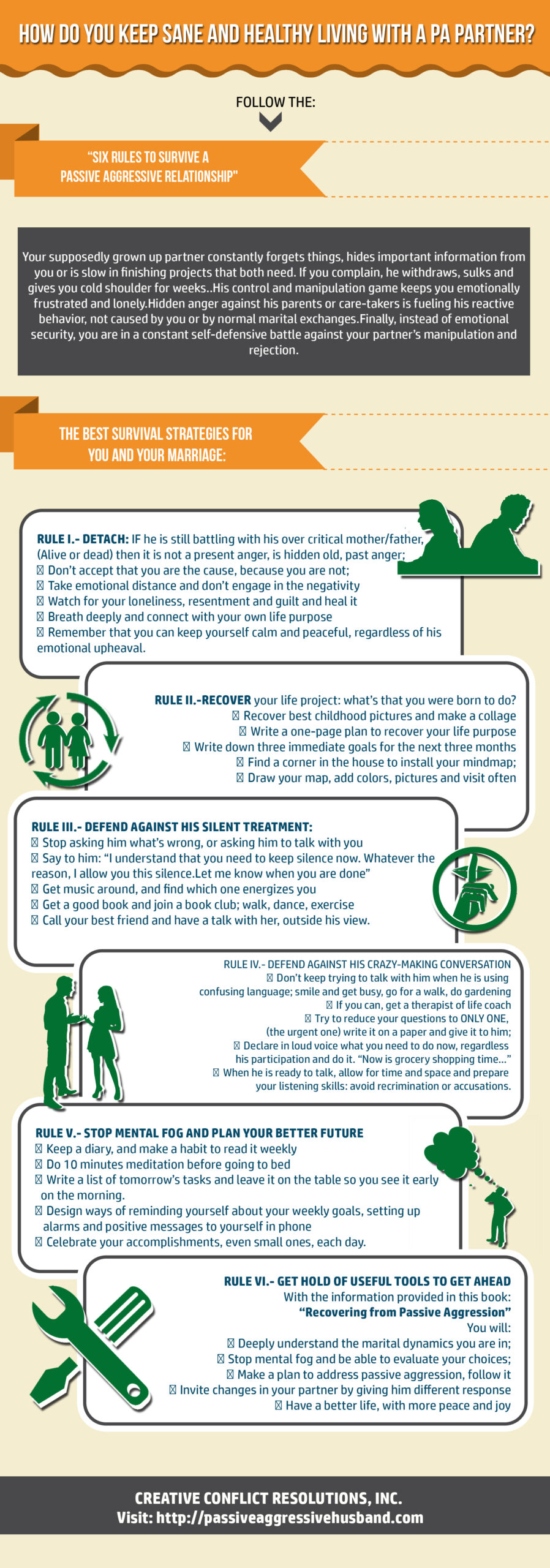
That is the reason we have prepared a practical tool to remind you of your choices, in the form of this map.
When you're in the middle of a difficult interaction with a passive-aggressive spouse, your brain often shifts into reactive mode. The stress hormones flooding your system make it nearly impossible to think clearly or remember the healthy responses you've learned. This is why preparation is absolutely critical. Having a visual map that you've studied beforehand gives you a mental framework to fall back on when emotions run high and rational thinking becomes difficult.
A clear strategy also helps you break free from the cycle of confusion and self-doubt that passive-aggressive behavior typically creates. Without a plan, you may find yourself constantly second-guessing your reactions, apologizing for things that aren't your fault, or engaging in endless circular arguments that never reach resolution. A strategic approach puts you back in the driver's seat of your own emotional experience, allowing you to respond from a place of strength rather than desperation.
We have listed the main choices and attitudes at each step, so you can remember what choice to do in front of difficult interactions.
Each step in the map represents a decision point—a moment where you can either fall into old patterns or choose a healthier path forward. For example, when your husband gives you the silent treatment, you have several options: you can pursue him desperately seeking connection (which often reinforces the behavior), you can retaliate with your own cold shoulder (which escalates the conflict), or you can calmly state your observations and then focus on your own activities (which maintains your dignity while refusing to participate in the power struggle).
The attitudes listed in the map aren't just about what you do—they're about how you hold yourself internally during these challenging moments. Maintaining an attitude of calm detachment doesn't mean you don't care; it means you're protecting your emotional core from being manipulated. Approaching interactions with curiosity rather than defensiveness can help you see patterns more clearly without becoming entangled in them. These subtle shifts in mindset can dramatically change the outcome of your interactions and your overall quality of life.
Perhaps you will find this tool useful? we need your feedback as usual. What would you like to have included there?
We genuinely want this resource to serve your needs as effectively as possible. Every relationship has unique challenges, and your experiences can help us refine and improve this tool for the entire community of women navigating similar situations. Your insights matter because they come from real-world application of these principles in the trenches of daily married life.
According to research published in the Journal of Family Psychology, passive-aggressive behavior patterns in marriages are associated with significantly lower relationship satisfaction and can contribute to chronic emotional stress for the receiving partner.
This research underscores what many partners already know from lived experience: passive-aggressive behavior isn't just annoying or frustrating—it can have serious implications for your mental and physical health over time. Chronic stress from ongoing relationship conflict has been linked to anxiety, depression, sleep disturbances, and even cardiovascular problems. Understanding that your struggle is real and validated by scientific research can help combat the gaslighting that often accompanies passive-aggressive dynamics, where you may be told you're "overreacting" or "too sensitive."
Additional studies have shown that partners of passive-aggressive individuals often develop hypervigilance, constantly scanning for signs of their spouse's mood or impending withdrawal. This exhausting state of alertness drains emotional resources and can lead to burnout. The survival map addresses this by giving you predetermined responses, reducing the mental energy required to navigate each interaction from scratch.
Here is the map:
https://www.pinterest.com/pin/490048003177792475/
Take time to study this map when you're feeling calm and centered. Consider printing it out and keeping it somewhere private where you can reference it before or after difficult interactions. Some women find it helpful to photograph the map on their phone so they can quickly review it during moments of stress. The more familiar you become with these pathways, the more naturally the healthier choices will come to you when you need them most.
Remember that using this map is a practice, not a perfect science. You won't always choose the ideal response, and that's completely normal. The goal isn't perfection—it's progress. Each time you successfully navigate an interaction using one of these strategies, you build confidence and strengthen your emotional resilience. Over time, these healthier responses become more automatic, requiring less conscious effort and providing greater protection for your wellbeing.
Frequently Asked Questions About Surviving Passive Aggression
What is passive-aggressive behavior in a marriage?
Passive-aggressive behavior in marriage involves indirect expressions of hostility, such as silent treatment, procrastination, subtle sabotage, or withholding affection. These behaviors allow the passive-aggressive partner to express anger or resentment without direct confrontation, leaving the other spouse confused and emotionally drained.
Common examples include "forgetting" important dates or commitments, agreeing to do something and then not following through, making backhanded compliments that leave you feeling hurt but unable to pinpoint exactly why, and responding to requests with sighs, eye rolls, or grudging compliance that makes you feel guilty for asking. The passive-aggressive husband might also use phrases like "fine" or "whatever you want" in tones that clearly communicate the opposite, creating a crazymaking dynamic where his words and his meaning don't align.
How can a survival map help me deal with a passive-aggressive husband?
A survival map provides a visual reference for the choices and responses available to you during difficult interactions. By having clear options laid out in advance, you can respond more thoughtfully rather than reactively, which helps protect your emotional wellbeing and maintain healthier boundaries.
Think of the map as a GPS for emotional navigation. Just as a GPS gives you alternative routes when you encounter traffic, the survival map shows you different paths you can take when you hit a roadblock in communication with your spouse. It removes the paralysis of not knowing what to do and replaces it with concrete options you can evaluate and choose from. This sense of having choices is itself therapeutic, as much of the distress in passive-aggressive relationships comes from feeling trapped and powerless.
What are the first steps to take when facing passive aggression?
The first steps include recognizing the passive-aggressive patterns, refusing to engage in the silent power struggle, and focusing on your own emotional regulation. Establishing clear boundaries and seeking support from a coach or therapist can also provide essential guidance during this challenging time.
Recognition is perhaps the most crucial first step because passive-aggressive behavior thrives in the shadows of ambiguity. Once you can clearly identify what's happening—naming the silent treatment as a control tactic rather than accepting it as "just how he is"—you begin to reclaim your power. Keeping a journal of incidents can help you see patterns over time and validate your experiences when self-doubt creeps in. From this foundation of clarity, you can begin implementing the strategies outlined in the survival map with greater confidence and consistency.
Can a passive-aggressive husband change his behavior?
Change is possible when a passive-aggressive husband genuinely recognizes his patterns and commits to personal growth, often with professional help. However, change must come from his own motivation; you cannot force transformation, but you can control your own responses and boundaries.
It's important to maintain realistic expectations about this process. Passive-aggressive patterns typically develop over decades, often rooted in childhood experiences, and they won't disappear overnight even with the best intentions. Progress is usually gradual, with setbacks along the way. Your role is to support positive changes when they occur while maintaining your boundaries when old patterns resurface. Ultimately, focusing on your own growth and responses is more productive than waiting for your husband to change, as this is the only aspect of the situation you can truly control.
How do I protect my mental health while living with passive aggression?
Protecting your mental health requires building a strong support network, practicing self-care, and maintaining firm emotional boundaries. Working with a conflict coach or therapist who understands passive-aggressive dynamics can help you develop personalized coping strategies and preserve your sense of self.
Self-care in this context goes beyond bubble baths and occasional treats—it means systematically prioritizing activities and relationships that replenish your emotional reserves. This might include regular exercise, meditation, time with supportive friends, creative pursuits, or spiritual practices. It also means learning to recognize and honor your own needs without guilt. Many partners of passive-aggressive individuals have learned to minimize their own needs to keep the peace; reclaiming your right to have needs is a powerful act of self-preservation.
Why do passive-aggressive partners avoid direct communication?
Passive-aggressive individuals often learned in childhood that direct expression of anger or needs was unsafe or unacceptable. As a result, they developed indirect methods of expressing frustration, which they carry into adult relationships as deeply ingrained communication patterns.
Understanding this background can help you develop compassion for your husband's struggles while still holding him accountable for his behavior. Many passive-aggressive individuals grew up in homes where expressing negative emotions led to punishment, rejection, or conflict they felt powerless to navigate. They learned that the safest way to express displeasure was through covert means that provided deniability. While this explanation doesn't excuse the behavior or its impact on you, it can help you depersonalize his actions and recognize that the pattern predates your relationship.
Where can I find more resources about passive-aggressive relationships?
Resources are available through relationship coaching programs, books on passive-aggressive behavior, and websites dedicated to emotional abuse awareness. Dr. Nora Femenia's Passive Aggressive Husband platform offers articles, surveys, coaching services, and practical tools specifically designed for partners navigating these challenging dynamics.
Building a library of resources and connecting with others who understand your experience can be incredibly validating and empowering. Online forums and support groups allow you to share experiences with women facing similar challenges, reducing the isolation that often accompanies these relationships. Remember that seeking help is a sign of strength, not weakness—it demonstrates your commitment to your own wellbeing and your willingness to invest in positive change.
📅 Last updated:


