
Reclaim Your Voice Today
You deserve to be heard. Download your free guide to break free from silent treatment and reclaim your power in your relationship.
This post is written for wives and partners who feel constantly confused, frustrated, or emotionally exhausted by their husband's communication patterns. If you find yourself questioning your own reality after conversations, chasing clear answers that never come, or suddenly consoling your husband when you were the one who needed resolution, you're likely dealing with passive-aggressive mind games. Dr. Nora Femenia, Ph.D., a conflict coach and relationship advisor, breaks down exactly how these manipulation tactics work and provides three actionable strategies to interrupt the cycle and restore healthier communication in your marriage.

Do You Live With a Partner Playing Mind Games With You?
Along the time you have been married, it takes some time to get used and be able to decipher the meaning under your husband's verbal expressions...you can think you both are having a normal conversation, and then some expression throws you out of balance...and the meaning is not clear any longer to you.
Has he promised to do the task now, or later? Or he means never? Why is he smirking when saying something negative? Why he uses vague words or leaves the answer unfinished when he is answering my questions? Why he goes into sudden silence, leaving you completely off? And if you get completely upset, and confront him in your desperation, crying or yelling, he can play the last card: "I'm a jerk"
According to research published in the Journal of Family Psychology, couples experiencing demand-withdraw communication patterns report significantly lower relationship satisfaction, and this dynamic is one of the most destructive predictors of marital distress and divorce.
Understanding the Core Dynamic of Passive-Aggressive Mind Games:
As the interaction between you and your husband becomes more and more one of "pursue-withdraw", where you follow up with him continuously to know the answers and he gets more and more evasive, it gets to a point when it becomes a game of cat and mouse. Your husband is beginning to enjoy finding new ways of avoiding feeling corralled by you, while you get more and more entrenched into your need for clear and precise responses. You are pressed by the need to have a shared home management system...so you don't feel like doing everything at home (plus your own job!)
Remember that he has honed his skills while growing up with a controlling parent, so he has years of practice...and know all the evasive forms to make you believe he will comply with your demands, while he doesn't intend to. To avoid answering you, (he is probably hemming and hawing, giving you evasive, incomplete answers, and if you push more, the cold shoulder).
Now, the stakes are becoming higher: if you confront his silent treatment, he can talk to blame you for something different or he can do a different trick to get you out of his case, back off and swallow your own anger: doing the "I'm sorry, I suck" deflection maneuver, so you have now to console him!
The goal is always the same: to get out of the work that needs to be done, whether that's emotional growth and maturity, or responding in a moral way in a difficult situation, to actual physical helping around the house, or with the kids, overall neglecting a partnership responsibility he has already agreed to share.
Three Practical Strategies to Stop the Mind Games:
I.- Step Back and Take a Big Breath to Break the Cycle:
You need to stop this game! Because it is impossible to win at this game, you will end up confused and angry. Avoid the temptation to escalate and yell at him. Tune down your rightful frustration and indignation. Keep breathing and tell yourself: "I'm not a supervisor and he is not my rebel employee."
II.- Make a List of Household Chores and Open a Fair Negotiation:
that need doing at the house and with the kids, and open a negotiation.
At a different time, invite him to a talk, late when the kids are in bed. And say: "I've noticed that you don't clarify with me what you think you want to do or not, but evade the discussion, so I don't know what you think or are deciding to do. Let's begin to do a list of the chores and then we can split them in the best way possible?"
And you can get his cooperation if the tune of the conversation is not demanding, accusatory but matter of fact. Be watchful not to admonish, preach, or demand in a bossy way, or he will get back to his passive resistance.
III.- Stop the Self-Derogatory Deflection Trick in Its Tracks:
What can you do if, just at that moment, he manages to do something to derail your intention, and gaslights you?
Instead of acting like a grown-up, saying:
"OK, now I see what is needed, will do my best, please, alert me when you see me forgetting to do the task I agreed to do to today?"
he serves you the traditional self-derogatory comment: "I suck; I'm a piece of shit," probably using a contrived and sorrowful body posture.
Here you are, confused and befuddled…why is he answering with this in-congruent response to the previous dialogue? Your brain goes into a short-circuit, and you feel that something happened to you, but is difficult to pinpoint exactly what…
When he uses this "self-deprecatory wallowing in guilt behavior," it makes you feel that being angry at him now is like unfairly beating down a guy who already hates himself more than you ever could hate him.
What can you do: I've found that it's pretty easily flipped upside down when parried by a swift: "So what are you going to do differently?".
Or like in this other response, I received from him:
He said, "I...I'm such an asshole." I was so pissed that I said, "Yes, you are! And what I need now is to stop playing games and show your commitment to the work we have to face together...!"
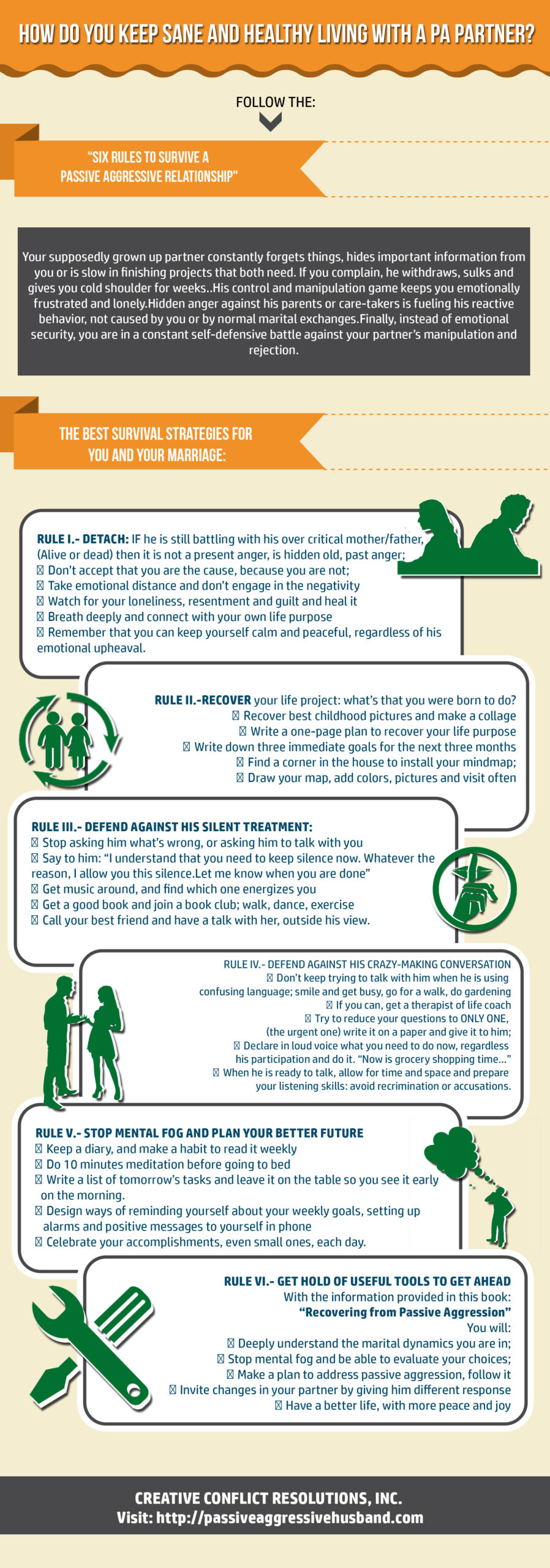
More readings about how to manage passive aggression tricks at home? Here is your Kindle book:
Keep reading!
Frequently Asked Questions About Passive-Aggressive Mind Games in Marriage
What are the most common signs that my husband is playing mind games?
Common signs include giving vague or incomplete answers to direct questions, using the silent treatment when confronted, smirking or showing incongruent facial expressions during serious conversations, and deflecting with self-deprecating statements like "I'm such a jerk." These behaviors are designed to confuse you, avoid accountability, and shift the emotional burden onto you.
Why does my husband say "I suck" or "I'm a terrible person" when I confront him?
This self-deprecatory response is a deflection tactic that shifts the conversation away from his behavior and onto his supposed self-hatred. It forces you into the role of comforter rather than the person seeking resolution. The goal is to make you feel guilty for being upset with someone who already appears to be suffering.
Is passive-aggressive behavior a form of emotional abuse?
Yes, persistent passive-aggressive behavior can be a form of emotional abuse because it creates confusion, undermines your sense of reality, and prevents genuine communication. When used consistently to avoid responsibility and manipulate your emotions, these tactics erode trust and emotional safety in the relationship.
Can a passive-aggressive husband change his behavior?
Change is possible, but it requires the passive-aggressive partner to first recognize and acknowledge their patterns. This often requires professional help, such as individual therapy or couples coaching, along with consistent effort and accountability. Without genuine willingness to change, these patterns typically continue.
How do I stop the pursue-withdraw cycle in my marriage?
The first step is recognizing that chasing your husband for answers often reinforces his withdrawal behavior. Instead, step back, regulate your own emotions, and approach conversations at neutral times with specific, non-accusatory language. Creating written lists of shared responsibilities can also reduce the need for repeated verbal follow-ups.
What should I say when my husband uses the silent treatment?
Avoid escalating or begging for a response, as this reinforces the power of the silent treatment. Instead, calmly state that you're available to talk when he's ready and then disengage. Setting a boundary that important decisions will be made with or without his input can also reduce the effectiveness of this tactic.
Where can I get more help for dealing with a passive-aggressive husband?
Resources include books on passive-aggressive behavior in marriage, relationship coaching with specialists like Coach Nora, and couples therapy with a therapist experienced in communication dysfunction. Online communities and support groups for partners of passive-aggressive spouses can also provide validation and practical advice.
📅 Last updated:


Dear Nancy,
not yet…thanks for your interest, I will consider having a newsletter soon..
Do you have a newsletter or articles that are sent out weekly or monthly.?